We help youth athletes move well, get stronger, and compete with confidence.
Bayside’s premium strength and conditioning coaching for youth
Hear from Our Young Athletes
Overcome Injuries
Achieve Personal Bests
Improve Sporting Performance









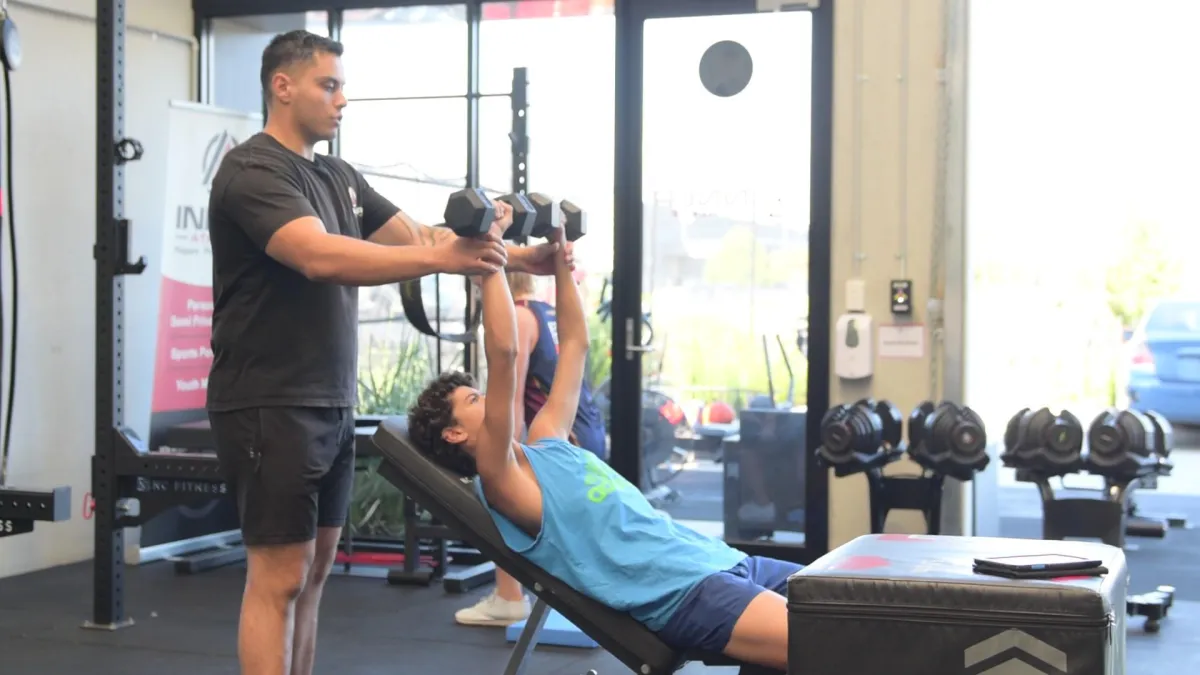
Is your young athlete injured or not improving in their sport?
The Inner Athlete team will help your child...
Overcome ongoing injuries that are limiting their performance
Become faster, fitter, and stronger to improve sporting performance and achieve personal bests
Build confidence, athletic skills and healthy training habits for long-term development
Feel And Perform Better With The Right Support

Youth Athlete Development
Overcome injuries, become faster, stronger, and fitter to help your child reach the next level.
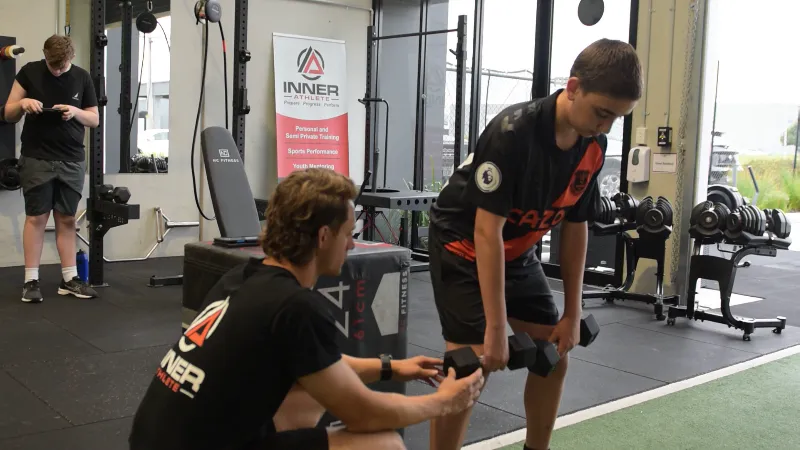
Teen Confidence Builder
Help your child to develop the confidence to keep up with their peers in their sport. Develop a positive self-image and confidence in themselves.
Feel And Perform Better With The Right Support
Youth Athlete Development
Overcome injuries, become faster, stronger, and fitter to help your child reach the next level.
Strength And Conditioning For Adults
Look, feel, and perform your best! Overcome injuries, create more energy, and enjoy your life!
Teen Confidence Builder
Help your child to develop the confidence to keep up with their peers in their sport. Develop a positive self-image and confidence in themselves.
Feel And Perform Better With The Right Support
Youth Athlete Development
Overcome injuries, become faster, stronger, and fitter to help your child reach the next level.
Teen Confidence Builder
Help your child to develop the confidence to keep up with their peers in their sport. Develop a positive self-image and confidence in themselves.
Get Started Now
Follow the 3 step process to get results
STEP 1
Book A Discovery Call
Discuss your child’s goals and discover how we can help them grow, improve and elevate their sport performance.
STEP 2
Schedule Your Quickstart Trial
Learn exactly what your child needs to improve their sport performance, stay injury-free and build long-term athletic growth.
STEP 3
See Results
Your child will be supported every step of the way as they work through a personalised plan that improves their sport performance and helps them reach their full potential.
Claim Your Free Parent's Guide
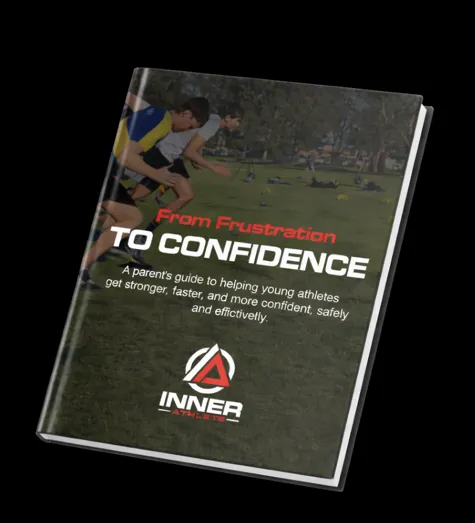
Enter your details below to receive your e-book
"From Frustration to Confidence - A Parents Guide to Helping Young Athletes Get Strong, Faster, and More Confident, Safely and Efficiently"".
Frequently Asked Questions
Have questions about our coaching, training, or the Quick Start Trial?
Here are answers to the questions parents ask us most often.
Is strength training safe for teenagers?
Yes. When programmed correctly and supervised by qualified coaches, strength training is one of the safest and most beneficial forms of exercise for children and teenagers. Research consistently shows that appropriately designed resistance training can improve muscle strength, bone density, coordination, balance, movement quality, confidence, and overall health and wellbeing.
For young athletes, strength training is about much more than lifting heavy weights. It teaches fundamental movement skills, reinforces good technique, and develops qualities such as strength, power, speed, and body control that transfer directly to sport. These physical adaptations can also improve recovery, increase resilience to training demands, and reduce the risk of many common musculoskeletal injuries.
Will lifting weights affect my child's growth?
No. There is no scientific evidence to suggest that properly supervised strength training negatively affects a child's growth. This is one of the most common myths surrounding youth resistance training. Current research shows that when children and adolescents participate in structured, well-supervised strength training programs, there is no increased risk to normal growth and development. Strength training has been shown to have a positive impact by improving bone mineral density, muscular development, posture, coordination, and overall physical literacy during important stages of growth.
Will my child receive an individualised training program?
Yes. Every athlete is different. They have different goals, sporting backgrounds, ages, growth stages, movement abilities, injury histories, training experience, and physical characteristics. Because of this, no two programs should be exactly the same.
Each athlete completes an initial movement assessment, allowing our coaches to identify strengths, limitations, and areas for improvement. We then develop an individualised program that reflects their specific needs, whether they are looking to improve performance, recover from injury, build confidence in the gym, or simply move better. Programs are regularly reviewed and progressed as the athlete develops.
How closely will my child be supervised during training?
We operate as a semi-private coaching facility, with a maximum of eight athletes training in each session. Every session is supervised by at least two qualified coaches, allowing us to provide a high level of individual attention while maintaining a safe training environment both inside and outside the gym. This coaching model allows us to closely monitor exercise technique, provide immediate feedback, make adjustments when needed, and ensure every athlete is progressing safely and effectively throughout their session.
Can you help if my child has an injury or ongoing pain?
Yes. We understand that injuries and ongoing pain are a normal part of many sporting journeys. Rather than stopping all training, we work closely with parents, athletes, and where appropriate, physiotherapists, sports doctors, or other allied health professionals to modify training around the injury.
Programs are adjusted to match the athlete's current stage of recovery or to address pre-existing conditions, allowing them to continue training safely while avoiding activities that aggravate symptoms. We focus on gradually rebuilding strength, improving movement quality, addressing underlying biomechanical limitations, and progressively returning the athlete to full participation in their sport. Our goal is to keep athletes moving safely while supporting both their rehabilitation and long-term performance.
What is included in the Quick Start Trial?
Our Quick Start Trial is designed to help us understand your child's current abilities and create a personalised plan to support their goals. The trial begins with a movement assessment and performance testing to identify strengths, areas for improvement, and establish a baseline. Using these results, we develop an individualised training program and guide your child through their first coached training session, teaching correct technique and explaining the purpose behind each exercise . We finish with a consultation to discuss the assessment findings, answer any questions, and outline how we can best support your child's long-term development. This ensures every athlete starts with a clear plan that is tailored specifically to their needs.
How often should my child train to see results?
Most of our athletes achieve excellent results training between two and four sessions per week. While many people believe more training always leads to better results, quality is far more important than quantity. The ideal training frequency depends on your child's age, sporting commitments, recovery capacity, training experience, and individual goals.
Our coaches carefully structure each athlete's weekly training to ensure they continue making progress without becoming overloaded. By balancing gym training with sport, school, and recovery, we help athletes improve consistently while reducing the risk of burnout or overtraining.
How should we structure my child's training week alongside sport?
Every athlete's schedule is unique, and their gym training should complement rather than compete with their sporting commitments. When planning an athlete's week, we consider factors such as sport training sessions, competition days, school workload, sleep, nutrition, and recovery. This allows us to schedule gym sessions at times that maximise performance while minimising fatigue.
We understand that balancing these commitments can be challenging for both athletes and parents over the long term. That's why we also offer performance consultations to help families create a practical weekly or seasonal plan that aligns with the athlete's goals, supports recovery, and provides the best opportunity for long-term athletic development and sustained performance.
Follow Us